
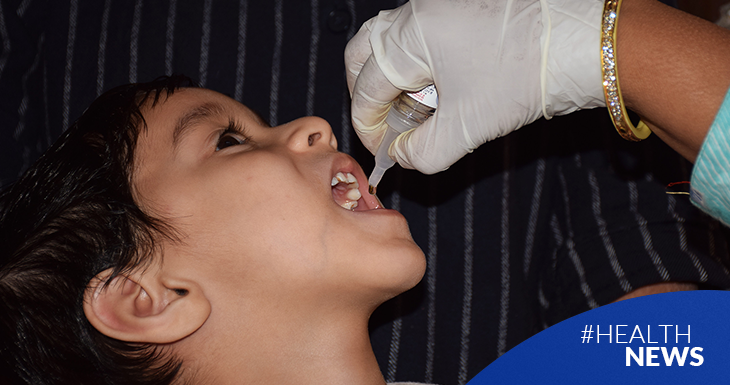
A disease that defined an era, and that the world is still struggling to eradicate.
Poliomyelitis, or polio, was one of the most feared diseases of the 20th century. It caused paralysis, disability, and death, especially in children. Thanks to vaccination, the virus has gradually disappeared from most countries, but its total eradication remains a pending goal.
From Egyptian tombs to the 20th century
Polio is not new: there is evidence of paralysis compatible with the disease in remains from Ancient Egypt (1580–1350 BC). However, major epidemics only emerged in the 20th century. Paradoxically, improvements in hygiene had an unexpected effect: children were no longer exposed to the virus at early ages and grew up without developing natural defenses. Thus, a susceptible population accumulated, and massive outbreaks began in Europe and North America.
In 1908, scientists Karl Landsteiner and Erwin Popper, in Vienna, demonstrated that polio was caused by a transmissible virus. Decades later, it was discovered that people could be contagious before showing symptoms, which explained its rapid spread in areas with poor sanitation.
Epidemics that changed customs
At the beginning of the 20th century, fear of contagion disrupted daily life. Families avoided swimming pools, fairs, and public events, and parents monitored every sign of fever or weakness, as the disease was a leading cause of childhood disability.
In 1916, New York experienced one of the most devastating epidemics, and by the 1950s, between 25,000 and 50,000 new cases were being recorded each year in the United States alone. The consequences were serious: irreversible leg paralysis, deformities, respiratory distress, and even death - between 5% and 10% died from immobilization of their respiratory muscles - in the most severe cases. Children who were crippled with paralysis would lead a life of disability and pain. This was the fate of thousands of people who survived the virus.
At that time, thousands of children suffering from respiratory paralysis were connected to so-called "iron respirators" or iron lungs. These devices, large metal chambers that enclosed the patient's body, used negative pressure to help them breathe when the diaphragm muscles were rendered useless by the virus. Although rudimentary, these devices were essential in keeping many patients alive for weeks, months, or even years. The rhythmic sound of the motor became a symbol of hope and resilience in hospitals around the world, marking a critical stage in the history of respiratory medicine and the fight against viral diseases.
How it is transmitted
The virus spreads primarily through the fecal-oral route, through water, food, or contaminated hands with infected feces. It can also be transmitted through contact with nasal secretions or saliva from an infected person, which accounts for less than 10%.
Therefore, outbreaks were always linked to a lack of sanitation and access to clean water.
No cure, but effective prevention
There is no specific treatment for polio. The approach is based on supportive measures (such as assisted respiration), physical therapy, corrective surgery, and orthopedic devices to reduce the after-effects.
The real revolution came with vaccines.
Before and after vaccines
In 1955, Jonas Salk presented the first inactivated vaccine (IPV), which demonstrated efficacy and safety. This vaccine was obtained by culturing poliovirus in monkey kidney cells and inactivating them with formalin. Salk became a hero when he dispelled fears of the dreaded disease. And his vaccine had an immediate impact: in the U.S., cases dropped from about 58,000 in 1952 to fewer than 10,000 in 1965.
Although it was the first polio vaccine, it wouldn´t be the last. Albert Sabin began working on a live-attenuated virus vaccine, believing that an oral vaccine would be superior to an injection. He started cultivating and testing different viral strains in animals and tissue cultures and eventually found three mutant strains of the virus that appeared to stimulate antibody production without causing paralysis.
In the 1960s, he introduced an oral vaccine (OPV) in the United States, which was easier to administer and key to mass immunization campaigns.
Today we know that:
- Two doses of IPV provide at least 90% protection.
- Three doses achieve more than 99% protection.
In most countries, the inactivated vaccine (IPV) is used for its safety; in others, the oral vaccine (OPV) remains an essential tool due to its low cost and ease of administration. Both Salk and Sabin waived patents on their vaccines, allowing them to be distributed freely, without economic barriers, saving millions of lives, especially in vulnerable communities, refugee camps, and areas without access to public health services.
Eradication, a global goal
Thanks to vaccination, polio was eliminated from almost the entire planet. However, it persists endemically in Afghanistan and Pakistan, and isolated cases have been detected linked to deficiencies in vaccination coverage or circulation of the virus in vulnerable regions.
The WHO had projected its total eradication by the year 2000, but the challenge remains. Eradicating polio doesn't depend solely on science; it also requires logistics, effective communication, and political and community commitment.
A commitment that cannot be stopped
World Polio Day is an opportunity to reinforce the importance of vaccination, sustain prevention programs, and maintain epidemiological surveillance. Each dose administered brings us one step closer to a world definitively free of polio.