
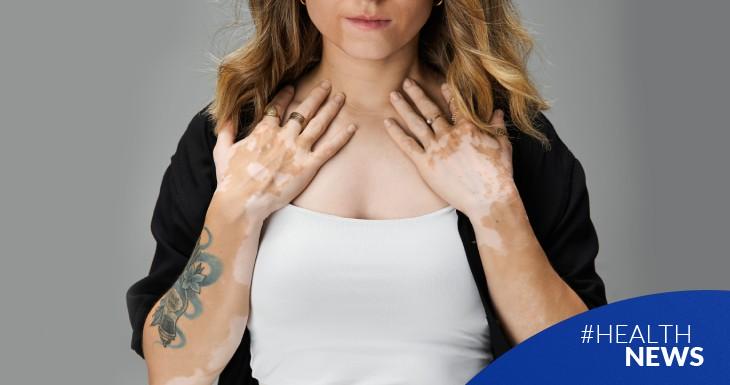
Skin carries memory, history, and melanin. When melanin begins to disappear from certain areas of the body, lighter patches appear, visibly changing the skin’s appearance.
This is vitiligo: a chronic autoimmune condition that is neither contagious nor life-threatening. It can develop at any age and affect people of all skin tones.
Although medically it is not considered a serious threat, its impact often extends far beyond the physical. Vitiligo does not hurt the skin; more often, it hurts through the way society looks at it.
It is estimated to affect between 0.5% and 2% of the world's population. While awareness has increased in recent years thanks to educational campaigns, public figures, and medical advances, myths and misconceptions about the condition still persist.
What Happens in the Body?
Vitiligo occurs when the immune system mistakenly attacks melanocytes, the cells responsible for producing melanin, the pigment that gives color to the skin, hair, and eyes.
As a result, certain areas begin to lose pigmentation, leading to the appearance of white or depigmented patches that may gradually spread or remain stable for years.
The patches most commonly appear on the hands, face, around the eyes and mouth, elbows, knees, feet, and other sun-exposed areas. In some cases, hair, eyebrows, or eyelashes may also lose pigmentation.
There Is No Single Cause
Although there is still no definitive single cause, it is now understood that vitiligo has a strong autoimmune and genetic component.
Many people with vitiligo have a family history of the condition or a greater predisposition to developing other autoimmune diseases, such as Hashimoto’s thyroiditis, type 1 diabetes, alopecia areata, psoriasis, or rheumatoid arthritis.
However, genetics is only part of the picture. Intense physical or emotional stress is frequently identified as a trigger or aggravating factor. Illnesses, sunburn, and exposure to certain chemicals may also contribute in genetically predisposed individuals.
Much More Than a Cosmetic Concern
Anxiety, insecurity, social isolation, and low self-esteem are part of the experience of many people living with vitiligo, particularly during adolescence or in environments where physical appearance carries significant social importance.
For many years, the medical approach to vitiligo focused primarily on its cosmetic aspects. Today, that perspective has evolved, recognizing that emotional well-being is also an essential part of treatment.
Current Advances: More Precise Treatments
Although there is still no definitive cure, treatment options have advanced considerably in recent years. The goal is no longer simply to slow disease progression, but also to restore pigmentation and improve quality of life.
Available treatments include topical corticosteroids and immunomodulators, which help reduce the autoimmune response during the early stages of the condition, as well as narrowband UVB phototherapy, one of the most widely used therapies to stimulate repigmentation.
One of the most significant breakthroughs has been the development of JAK inhibitors, medications that target specific immune pathways involved in vitiligo. Some have already been approved in several countries for certain forms of the disease and have shown promising results, particularly in restoring facial pigmentation.
In selected cases where the disease is stable, procedures such as micrografting or melanocyte transplantation may also be considered.
Can It Be Stopped or Reversed?
The answer depends on each individual case. Some people achieve complete disease stabilization for years, others recover part of their pigmentation through treatment, while in some cases the patches continue to progress unpredictably.
For this reason, modern management is based on personalized treatment plans, ongoing dermatological follow-up, and emotional support.
The major difference compared to previous decades is that today there is a better medical understanding of the disease, more research, and a wider range of therapeutic options available.
More Information, Less Stigma
In recent years, models, athletes, and public figures living with vitiligo have helped transform society’s perception of the condition. Skin is no longer viewed solely through the lens of uniformity, and a more diverse and realistic understanding of human appearance is emerging.
World Vitiligo Day seeks to do exactly that: educate, raise awareness, and break down prejudice.
Understanding that vitiligo is not contagious, that it poses no risk to others, and that it has a legitimate medical basis is also a form of inclusion. Because behind every patch of depigmented skin is a person whose identity extends far beyond appearance.