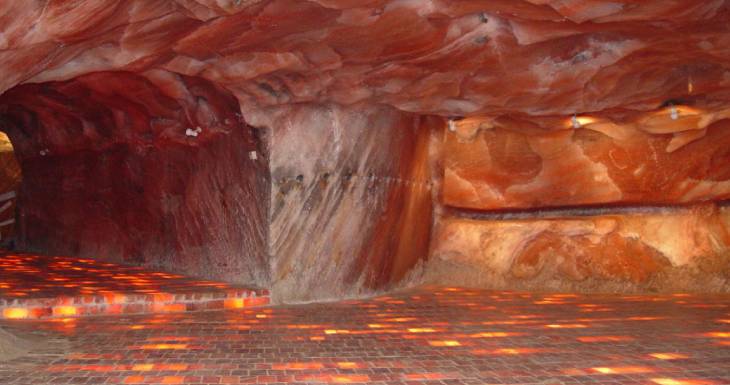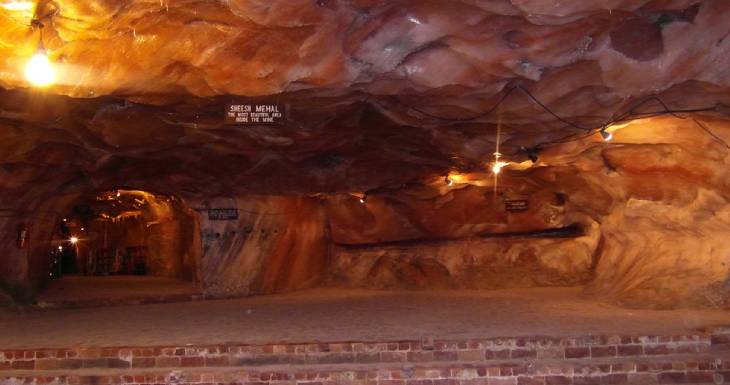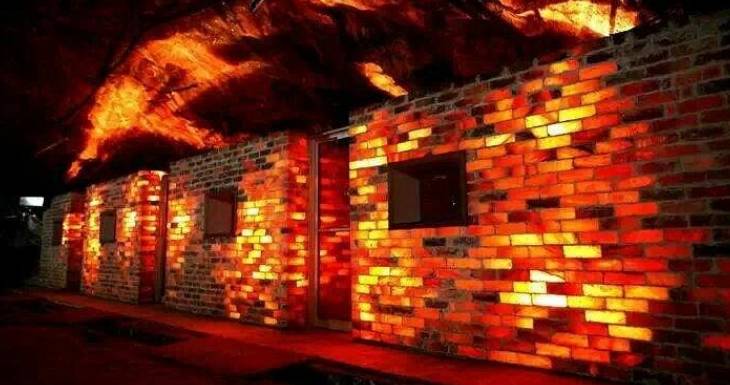
In the heart of Pakistan, beneath a seemingly arid and silent mountain range, lies one of the most striking underground structures on the planet: the Khewra Salt Mine, a hidden world of glittering tunnels, monumental chambers, and natural architecture carved into pink rock salt.
This is no ordinary mine. Khewra is one of the largest and oldest in the world, and its origin is wrapped in a blend of history and legend. According to local tradition, it was Alexander the Great, more than 2,300 years ago, who noticed his horses licking the rocks in the area during a military campaign. That curiosity about the “strange ground” is said to have sparked the myth of its discovery.
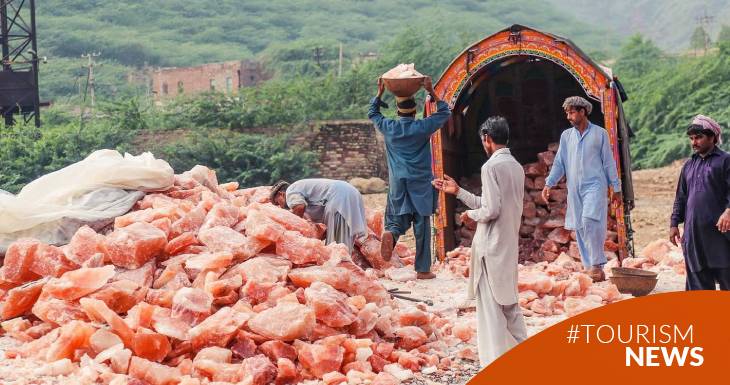
Organized mining, however, came centuries later. In the 13th century, the first systematic extractions began under local rulers, and later, during colonial times, the British developed large-scale exploitation. The true modern boost arrived in the 20th century, with industrial techniques that transformed Khewra into a strategic center for salt production—not only for consumption, but also for therapeutic, decorative, and architectural uses.
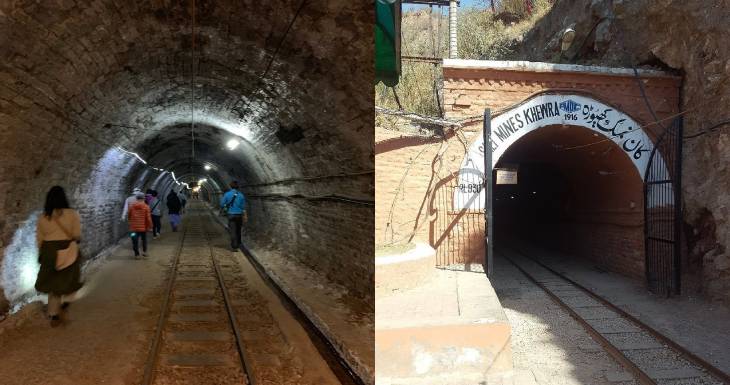
Today, the mine is located in Punjab (Pakistan) and extends like a true underground city. Beneath the surface, the complex covers approximately 110 km², reaching about 730 meters deep into the mountain from its main entrance. Its internal system consists of more than 40 kilometers of tunnels, distributed across different levels, chambers, and galleries.
The structure remains stable thanks to a mining engineering method known as “rooms and pillars”: only about 50% of the salt is extracted, leaving the rest as natural support for the mountain. In other words, the salt itself holds up the mine. Another surprising fact: the interior maintains a constant temperature between 18 and 20 °C year-round, keeping the visit comfortable and stable regardless of the outside climate.
It is, quite literally, like walking through a secret city that exists only underground.
But Khewra is not just a mining site—it is also an international tourist destination. The Khewra Salt Mine dazzles not only local visitors: each year it receives around 250,000 people drawn by its beauty, history, and geological uniqueness, making it one of the most visited tourist attractions in Pakistan. While most tourists come from within the country—reflecting the symbolic and cultural value of this place for national identity—visitors also arrive from around the world, curious to discover the famous “salt city” and the origin of the renowned Himalayan pink salt.
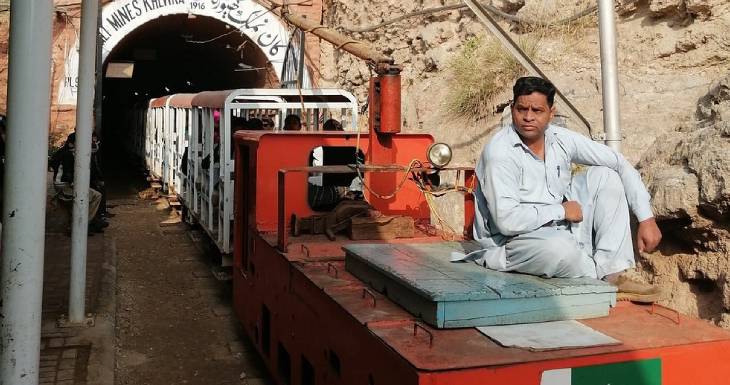
The tourist experience is carefully organized. Access to the mine can be on foot or via an internal electric tram, made up of old cars from the 1930s, originally used during the British exploitation period. This historic train carries visitors from the entrance to the main hall, passing through illuminated tunnels and wide galleries that reveal the scale of the site.
Inside, the tour includes:
- Gigantic chambers of natural salt
- Sculptures and chandeliers carved from salt blocks
- Illuminated statues glowing in pink tones
- Underground stations
- A fully operational post office used by workers
- The famous “Pull Sarat” salt bridge, 25 meters long, built with salt bricks over a saline pond
- An emergency dispensary historically linked to respiratory treatments
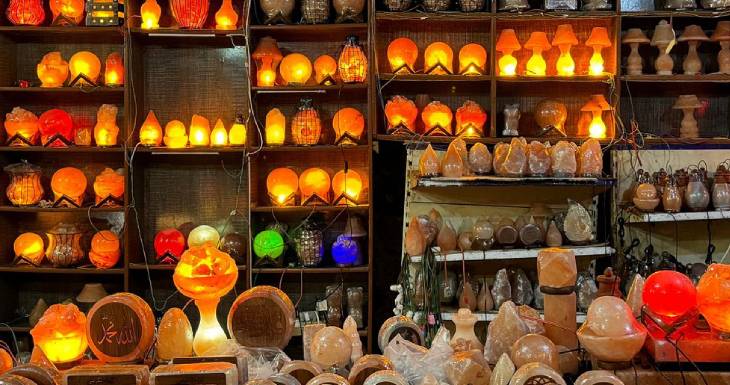
The tour culminates at the so-called “Salt Lake,” an underground water mirror that reflects the pink lights of the walls, creating an almost unreal atmosphere. The experience is completed with a souvenir shop where salt, in all its forms, becomes a cultural object, keepsake, and symbol.
There are also areas set up for light speleology, a recreational and safe activity that allows exploration of deeper sections of the mine without technical expertise, combining adventure, science, and educational tourism.
The Khewra Mine is also accessible. It is located in Punjab, about 288 meters above sea level. From Islamabad or Rawalpindi, it takes about 2.5 hours by car, and from Lahore about 3.5 hours. While there is no direct public transport to the entrance, regional buses and taxis from nearby cities can be combined.
Within the site, there is parking, a short walk to the entrance, and once inside, the internal train allows comfortable travel through the main sections, making the visit suitable for all kinds of audiences.
But Khewra is not only a visual or tourist experience. It is also a space where history intersects with health, science, and well-being. The silent protagonist of this underground universe is Himalayan pink salt, a product that generates interest both in gastronomy and in natural medicine.
Although it is not a “miracle superfood,” it does present real differences compared to common salt:
It is less processed, coming directly from natural geological deposits without intensive industrial refinement.
It has a broader mineral profile, with small amounts of calcium, potassium, and magnesium, responsible for its characteristic pink color and more complex flavor.
It has therapeutic uses, especially in salt lamps and halotherapy practices, where salt microparticles are used in controlled environments for respiratory conditions.
In cooking, its stronger flavor allows for smaller quantities, which may help moderate consumption.
However, it is important to clarify: pink salt is not safer for people with hypertension, since its sodium content is practically the same as common salt.
The real difference between common salt and pink salt is not a matter of trends, but of nutrition and public health. Traditional table salt is usually iodized, meaning artificially enriched with iodine, an essential micronutrient for thyroid function. Pink salt, on the other hand, does not contain added iodine, as its composition is completely natural.
Therefore, neither is “better” in absolute terms: they have different nutritional profiles, uses, and complementary functions. The choice should depend both on taste and on individual needs.
Visiting the Khewra Salt Mine is, ultimately, a double experience: a tourist journey that dazzles with its underground beauty, monumental scale, and ancient history, and at the same time, an invitation to rethink an everyday element like salt—not only as a seasoning, but as a natural resource, geological heritage, and factor impacting human health and well-being.