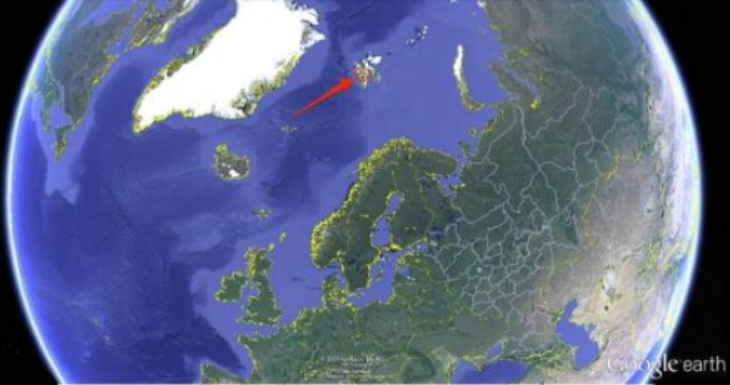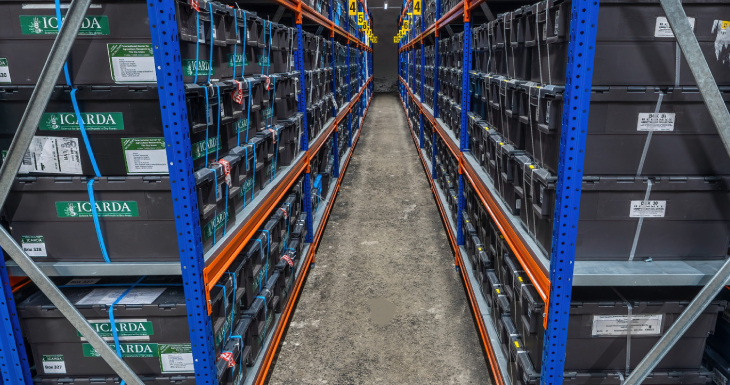

On a remote Arctic island, more than 1,000 kilometers from the North Pole, lies a place designed to safeguard something as basic as it is essential: the foundation of human nutrition. The Svalbard Global Seed Vault does not store money or objects of traditional value. It stores seeds. Millions of them.
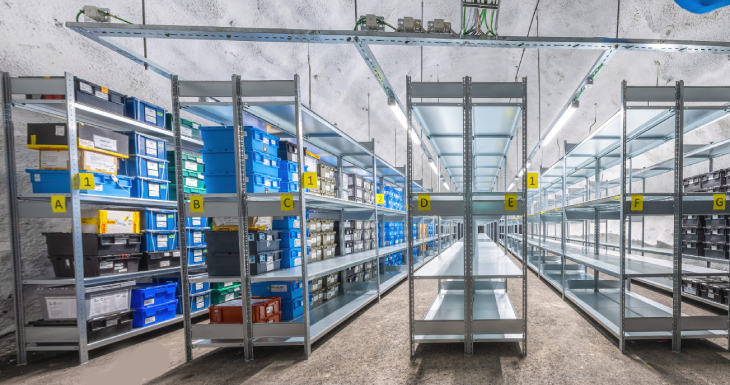
Currently, it holds over 1.3 million samples from nearly every country in the world. Yet its total capacity is much greater: it is designed to house up to 4.5 million crop varieties, equivalent to more than 2 billion seeds. This is not just any collection, but a global backup of agricultural biodiversity.
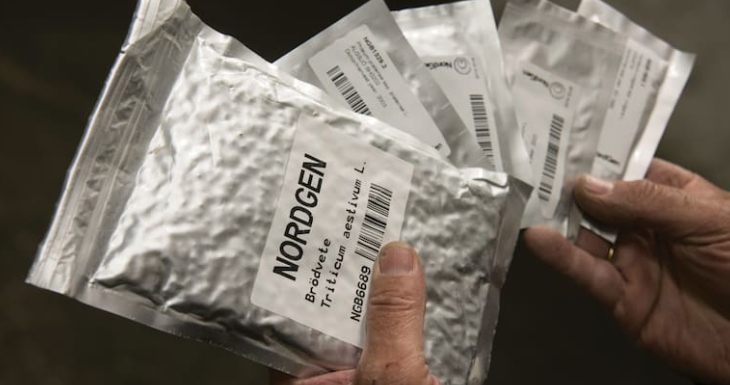
In a world where digital systems rely on backups to ensure continuity, this place fulfills an equivalent function, but applied to nature. Each sample is a safeguard copy of essential crops such as wheat, rice, maize, or legumes — the pillars of global nutrition.
Designed to withstand the passage of time
The vault is carved more than 100 meters into a mountain and contains three internal chambers, though only one is currently in use. Its design is not merely about storage but about extreme resilience.
Seeds are preserved at –18 °C, sealed in multilayer airtight packages that minimize oxygen presence. Under these conditions, biological activity slows to the point of allowing conservation for extraordinarily long periods — in some cases, hundreds or even thousands of years.
A key natural advantage adds to this resilience. The permafrost —the region’s permanently frozen soil— acts as a passive cooling system. Even in the event of a power failure, internal temperatures could remain low enough to preserve seeds for decades.
A system built on global trustl
The vault’s operation is deliberately simple. Each country deposits its own seeds and retains ownership of them, much like safety deposit boxes. No one can access another’s collection. This model, known as a “black box” system, makes the vault a neutral infrastructure serving the international community.
In practice, Svalbard functions as a backup for more than 1,700 seed banks worldwide. It does not replace these centers but protects them against irreversible losses.
Its value has already been tested. During the Syrian civil war, the Aleppo seed bank —one of the most important for crops in arid regions— ceased to function. Thanks to copies previously stored in Svalbard, it was possible to recover those varieties and rebuild the collection in other countries, ensuring the continuity of crops vital to regional food security.
A future kept in silence
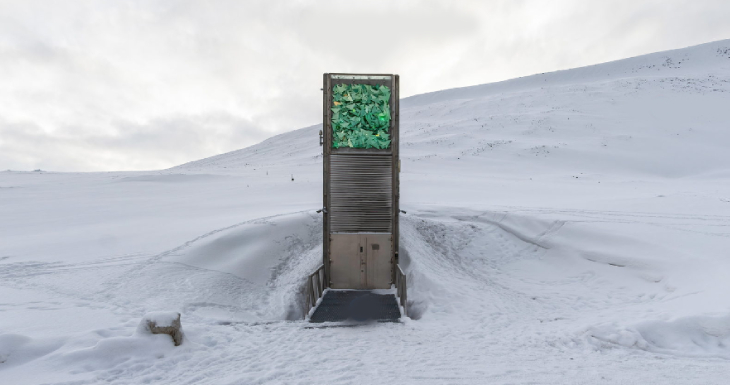
Svalbard is not a tourist destination nor a site open to the public. There are no guided tours or infrastructure designed to receive visitors. Only a discreet entrance emerges from the ice, almost imperceptible in the extreme landscape. Yet there is a way to explore its interior: a virtual tour allows anyone to see the vault in detail and understand how this unique conservation system works.
Explore the vault through the virtual tour
Its importance, however, is global. In a scenario marked by climate change, biodiversity loss, and pressure on food systems, this place represents a concrete form of anticipation. It does not respond to immediate urgency but to long-term planning.
More than a deposit, the Svalbard Vault is a collective decision: to preserve the genetic diversity of crops and ensure that, in any critical scenario, the possibility of rebuilding remains.
Because within something as small as a seed lies not only life. There is continuity. There is resilience. And above all, there is future.